Pilates is a practice with many entry points. This guide offers useful context without making the experience more complicated than it needs to be.
Before you book
Look for a class described as beginner, foundations, or intro, and check that the studio welcomes first-timers on apparatus. Many studios offer an introductory private session or a first-class offer that includes a short equipment orientation. If you have a health condition, an injury, or you are pregnant, ask your doctor or another qualified professional about appropriate exercise first, then tell the studio when you book.
Booking logistics are simple: bring yourself in comfortable movement clothing and grip socks if the studio requires them. Leave jewelry at home if you can, and arrive with enough time to use the restroom and settle in. Most studios provide the equipment and props; you do not need to bring anything beyond what the confirmation email lists.

Meeting the reformer
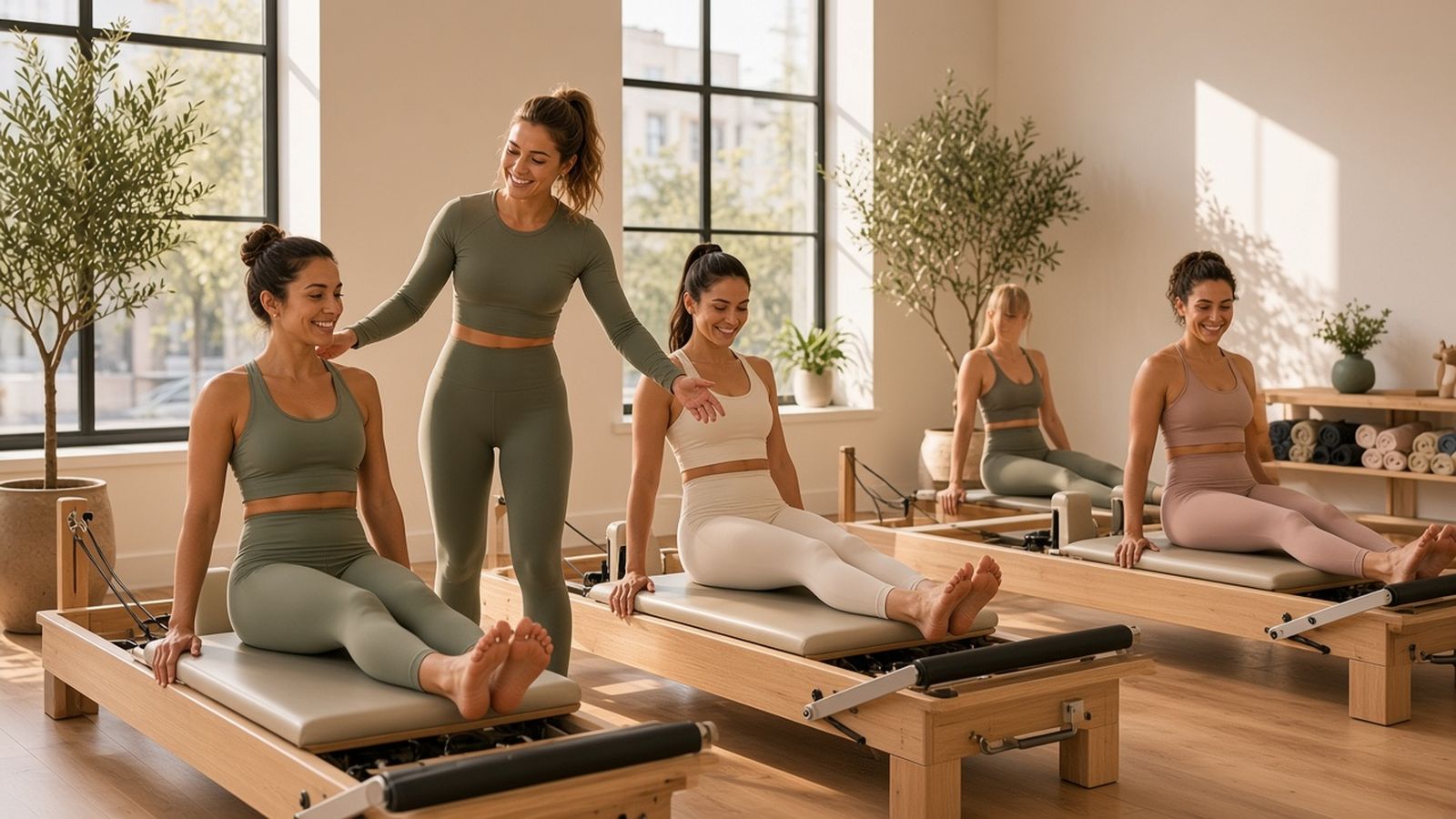
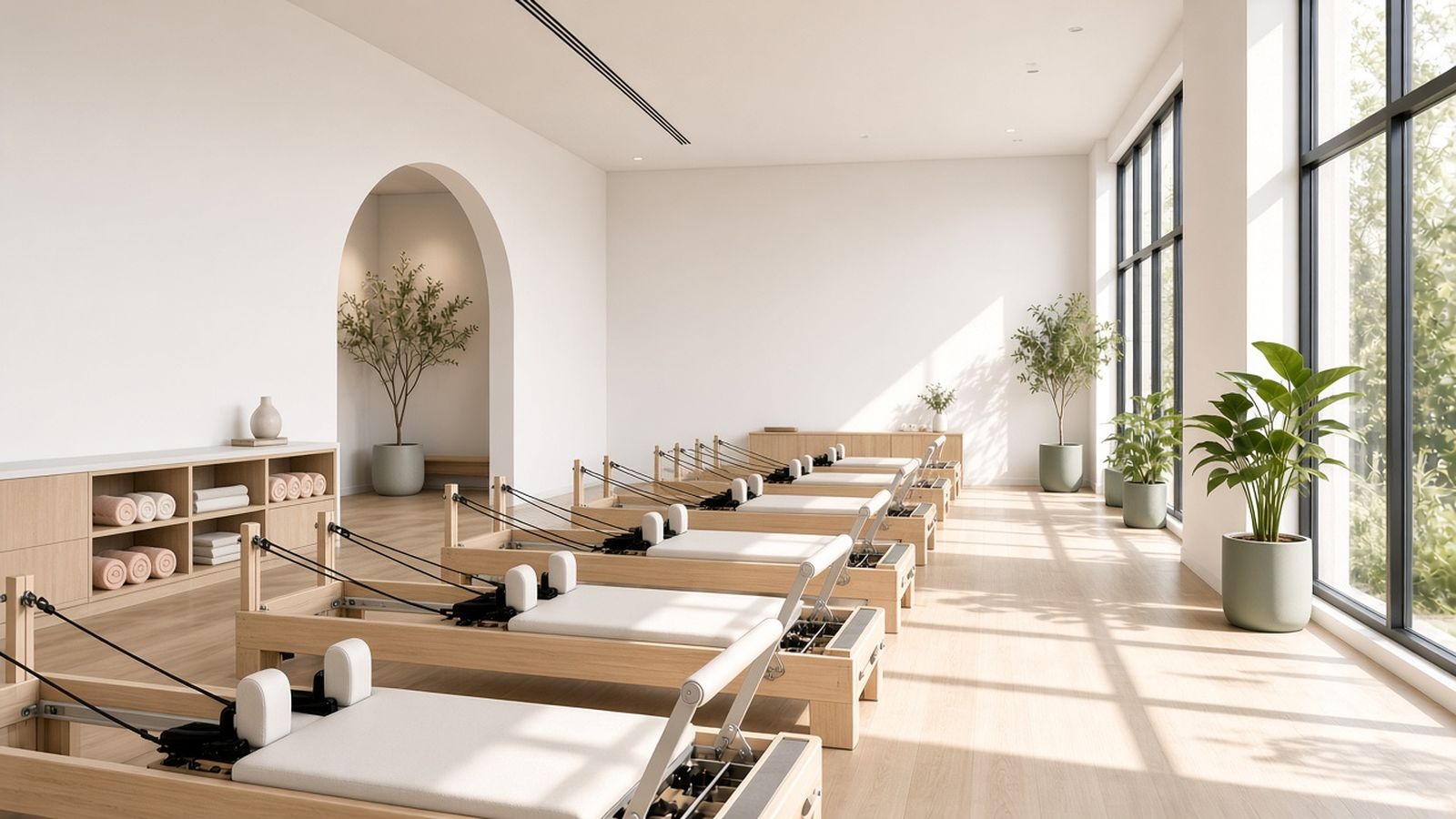
A reformer is a padded carriage that slides along a frame, connected to springs, with a footbar at one end and straps for hands or feet. The springs provide resistance and support, and changing them changes how an exercise feels. Your instructor will show you how to get on and off safely, where your head and shoulders rest, and how the carriage moves.
The moving carriage is the most surprising part for newcomers. It responds to everything you do, which makes it a wonderful teacher: uneven effort shows up immediately as an uneven glide. Do not worry about smoothness in your first class. Attend to the instructions, and smoothness will come with repetition.
How the class runs
A beginner reformer class usually covers footwork, a few leg and arm patterns, some trunk work, and a cool-down. The instructor demonstrates each exercise, explains the spring setting, and circulates to adjust positioning. Expect options: lighter springs, smaller ranges, or a hands-on strap position that feels more manageable. Take the option that lets you move with control and keep breathing.
Spring talk deserves a note. Heavier is not better; springs both resist and assist, and the right setting depends on the exercise and your body. If a movement feels impossible or effortless, say so. Adjusting springs is a normal, expected part of the class, not a disruption.
Common first-class exercises
Footwork teaches you how the carriage and springs interact while lying on your back. Arm work with the straps introduces pulling and pressing patterns. Trunk work might include gentle bridging or abdominal patterns with the feet in straps. None of these require prior experience, and each has an easier version the teacher can offer.
Etiquette and small details
Wipe down the carriage and any props at the end of class if the studio asks; most provide cleaning supplies. Keep your belongings in the cubbies provided, silence your phone, and let the instructor know if you need to leave early. If you must change springs, wait until the exercise is over or ask for help rather than adjusting mid-movement.
Grip socks are worth a mention: many studios require them for safety and hygiene, and they genuinely help you feel stable on the carriage and footbar. If you forget yours, ask the front desk; most studios sell pairs.
After class
Expect mild muscle tiredness a day or two later, often in places you did not anticipate, such as the backs of your arms or the deep trunk. Mild soreness after a new activity is common. Sharp pain, joint pain, or symptoms that concern you deserve professional attention; ask your doctor if something does not feel right rather than pushing through.
Plan your next class while the experience is fresh. A second session within a week or two helps the movements feel familiar, and familiarity is what turns a first try into a practice. Note any questions you had and bring them to the next instructor; teachers appreciate the engagement.
If you feel behind
Everyone in the room had a first reformer class, and most people remember feeling uncoordinated. The carriage amplifies small differences in effort, which can make your first attempts look wobbly on video and feel confusing in the moment. That is the method working: it is giving you information, not judging your performance.
Ask for a demonstration, take a rest without announcing it, or repeat an easier version as many times as you need. A supportive class treats those choices as normal. If the room you picked does not, try another studio; you have many options, and the right teacher makes the apparatus feel like a welcome rather than a test.
Helpful next reads
Find a studio near you.
Explore local studios and choose a place that fits your schedule, questions, and way of moving.
FAQ
Is a reformer class hard for beginners?
It can feel unfamiliar, but beginner classes teach the equipment from zero. Tell the instructor it is your first class and take the easier options offered.
What should I wear to a reformer class?
Comfortable, fitted movement clothing and grip socks if the studio requires them. Avoid loose clothing that can catch in the springs or straps.
Will I be sore after my first reformer class?
Mild muscle tiredness a day or two later is common after any new activity. Sharp or joint pain is a reason to stop and seek professional advice.
How do I know which spring to use?
You do not need to know. The instructor will tell you the setting for each exercise and will adjust it for you as needed.
How often should a beginner take reformer class?
One class a week is a sensible start for many people, adding more when the schedule and recovery allow. Choose a rhythm you can sustain.