
Pilates is a practice with many entry points. This guide offers useful context without making the experience more complicated than it needs to be.
Begin with the right kind of support
Back pain is a broad experience, not one single condition. Discomfort can relate to many factors, and the right response depends on your history, symptoms, movement tolerance, and professional assessment. Pilates may be one part of a movement plan for some people, but it should not be presented as a cure or a substitute for medical care. If your pain is new, severe, worsening, persistent, or accompanied by concerning symptoms, seek advice from a doctor or another qualified clinician.
Physical therapists and chiropractors can be valuable partners when you want professional help understanding movement, strength, mobility, or daily habits. Their approaches and scopes differ, so ask questions about their credentials and plan. A Pilates instructor can then work from appropriate guidance, staying focused on teaching movement and referring out when a concern belongs with a healthcare professional.
Listen for red flags
Do not push through symptoms that feel alarming or outside your usual experience. Numbness, weakness, loss of coordination, unexplained fever, significant trauma, or changes in bladder or bowel function are examples of concerns that need prompt professional attention. This guide cannot assess your symptoms.
Finding an appropriate instructor
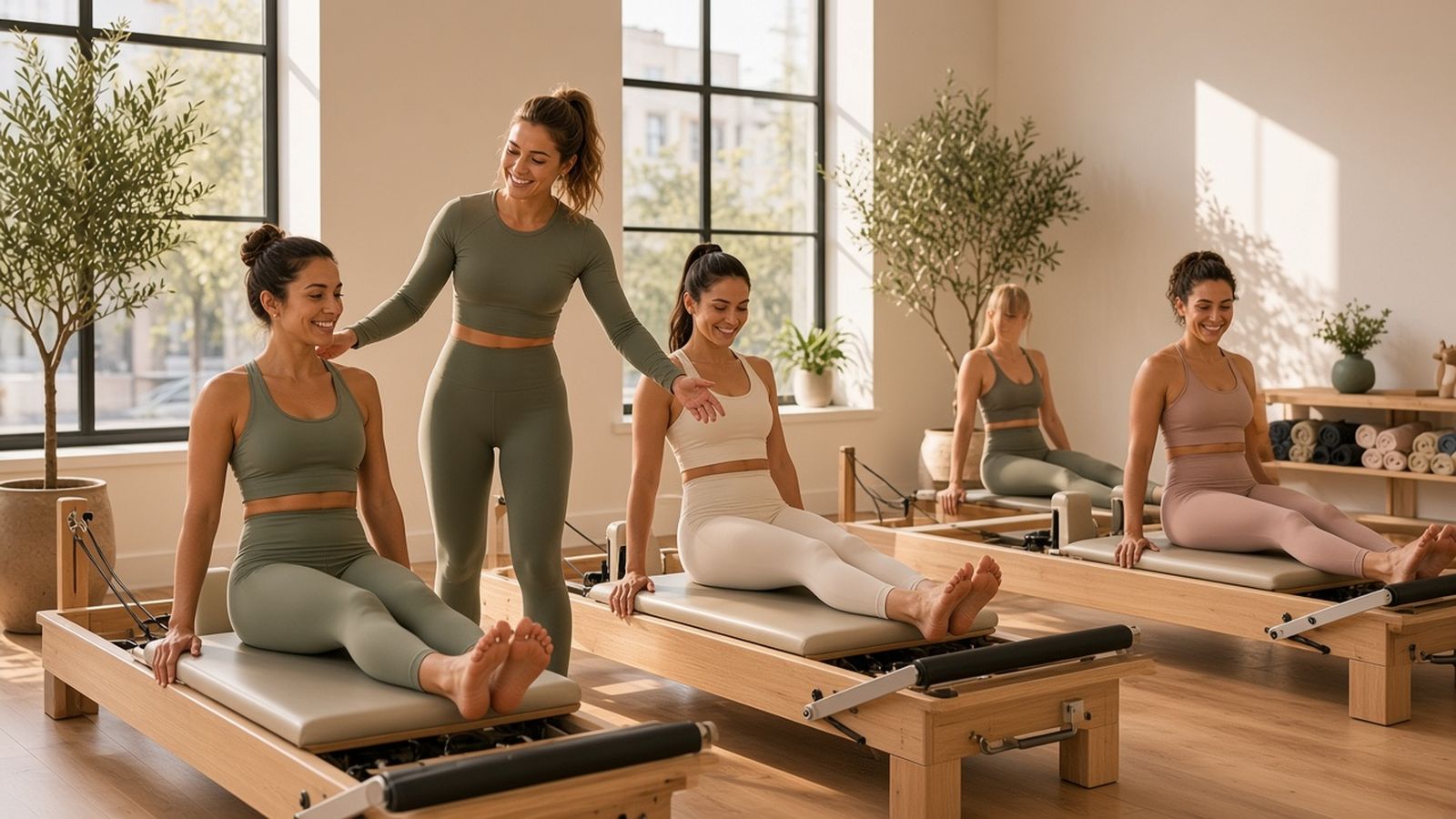
Ask about the instructor’s foundational Pilates education, continuing education, and experience working with people who have pain. Training in anatomy, movement observation, pain-informed communication, or collaboration with physical therapists can be useful. Be cautious of language that promises to fix your spine, erase pain, or produce a guaranteed result. A good teacher can be encouraging without making claims they cannot support.
Before class, explain what you have been told by your healthcare professional, what movements you are avoiding, and what you want to learn. The instructor should ask clarifying questions, offer choices, and respect your decision to stop. Hands-on cueing should be explained and consent-based. If the class feels like a test of toughness, it may not be the right environment for you.
How a class may be adapted
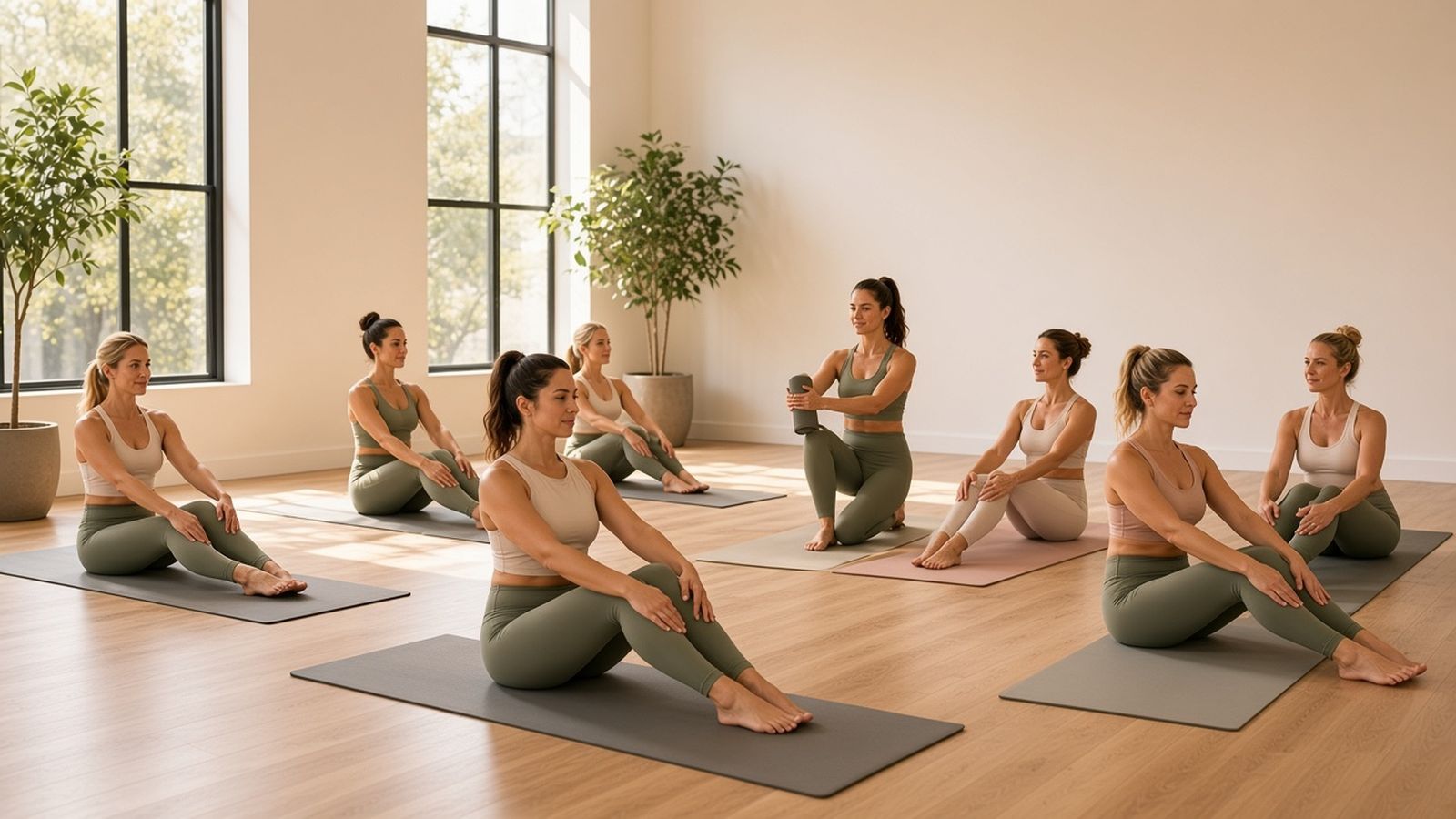
Adaptations can change the position, range, resistance, tempo, support, or number of repetitions. You might work seated instead of lying down, use a prop for feedback, limit a range that feels provocative, or pause between movements. The specific option depends on your guidance and response. There is no universal “back pain sequence,” and a responsible instructor will observe rather than force a prewritten answer.
The goal of a class is not to prove that you can ignore symptoms. It is to explore movement within an appropriate, communicative boundary. You may notice that one day calls for more support and another day allows more variety. Keep your healthcare team informed about meaningful changes and ask the instructor how to modify when your symptoms shift.
Private sessions can create room
A private or very small session can make it easier to share context and adjust the lesson. It may be more expensive, so ask about the instructor’s experience, the session structure, and how they coordinate with outside professionals before booking.
Questions to bring to a professional appointment
If you are seeing a doctor, physical therapist, or chiropractor about back discomfort, bring practical questions about movement. Ask which positions or activities are reasonable to explore, what symptoms should prompt a pause, and what information would be useful to share with an instructor. You can also ask whether a private session, group class, walking routine, or another form of activity makes sense at this stage.
A clear referral conversation protects everyone’s role. The healthcare professional can address assessment and treatment within their scope, while the Pilates instructor can translate approved movement ideas into a class setting. Keep the advice current if your symptoms change. The goal is not to collect permission once and ignore the conversation; it is to create a support network that can adjust with you.
Choosing between mat and apparatus
Mat work can provide a simple setting where you can focus on breath, position, and controlled movement without a large amount of equipment. Reformer or other apparatus work may offer support, resistance, or feedback that changes how a movement feels. Neither is automatically better for back pain. The useful question is which setting lets you understand your options and communicate easily with the instructor.
Start with a beginner, foundations, private, or therapeutic-minded class only when the studio accurately describes its scope. Ask whether the room can accommodate your needs and whether the instructor will provide alternatives. If a class has a large group and fast transitions, it may be harder to receive individual attention. A slower format can be a practical place to begin.
Keep a simple symptom conversation
You do not need to create a detailed medical report for every class, but a short check-in can help. Tell the instructor what has changed, which movements you were advised to avoid, and what kind of support helps. If your symptoms fluctuate, ask whether the studio prefers a call, a note on your booking, or a conversation before class. A predictable process makes it easier to communicate without feeling like you are taking time away from the group.
After class, note whether the experience gave you useful information or raised a question for your healthcare professional. Do not use a single good or difficult session to make a diagnosis. Treat it as one piece of a larger conversation, and allow your plan to change when the evidence or professional advice changes.
Build confidence without rushing
A sustainable practice may begin with short sessions, gentle walking, or a small number of exercises recommended by your care team. Track how you feel without turning every sensation into a score. Pain can fluctuate for many reasons, and a single class cannot tell you everything about your capacity. Use professional guidance to interpret changes rather than relying on a promise from an instructor or an online video.
The right studio makes the next step clearer. It will welcome your questions, explain its instructor training, and help you choose a format that matches your situation. Pilates can be a thoughtful movement education experience, especially when it sits inside a broader network of medical, physical therapy, chiropractic, and personal support rather than being asked to do every job.
Helpful next reads
Find a studio near you.
Explore local studios and choose a place that fits your schedule, questions, and way of moving.
FAQ
Can Pilates help back pain?
It may be part of a movement plan for some people, but back pain has many causes. Consult a qualified professional and avoid treating Pilates as a guaranteed cure.
Should I see a physical therapist or chiropractor first?
For new, persistent, severe, or concerning symptoms, professional assessment is a sensible first step. Physical therapists and chiropractors can offer different forms of qualified guidance.
Is reformer Pilates safe for back pain?
It depends on your symptoms, guidance, and instruction. Tell the instructor what you have been advised and choose a class where modifications and communication are expected.
Should I push through discomfort in Pilates?
Do not ignore sharp, alarming, or unusual symptoms. Stop, communicate with the instructor, and seek professional guidance when symptoms concern you.
Can a Pilates instructor diagnose my back pain?
No. Instructors teach movement within their training and should refer medical questions to qualified healthcare professionals.