
Pilates is a practice with many entry points. This guide offers useful context without making the experience more complicated than it needs to be.
How to use this glossary
Pilates has a rich vocabulary that reflects its history, apparatus, exercise repertoire, and teaching traditions. Some terms describe a piece of equipment, some describe a position or action, and others describe a principle such as concentration or control. Different instructors may use slightly different names for similar ideas. That variety is normal and does not mean one class is using the language incorrectly.
Use this glossary to feel more oriented, not to turn class into a vocabulary test. The best definition is the one that helps you understand the purpose of an exercise and make a clear choice. If a teacher says something you do not recognize, ask for a demonstration or a plain-language explanation. Learning happens through seeing, feeling, and repeating.
A–F: apparatus and foundations
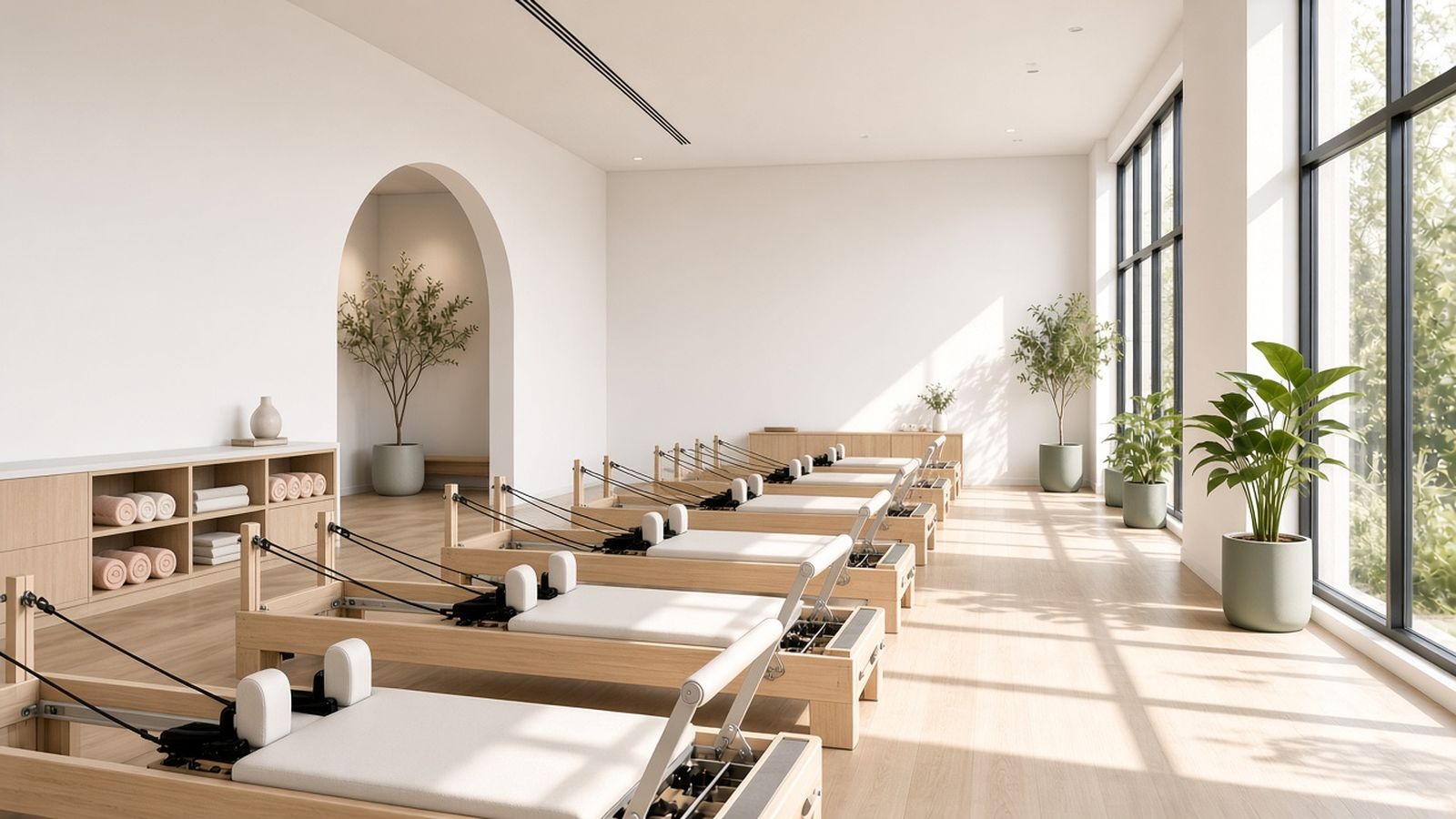
Apparatus terms often sound technical because they describe the tools that shape a session. The reformer, Cadillac, chair, and barrels each offer different forms of support and resistance. Foundational language helps a teacher organize the class, but you can learn it gradually through practice.
Apparatus
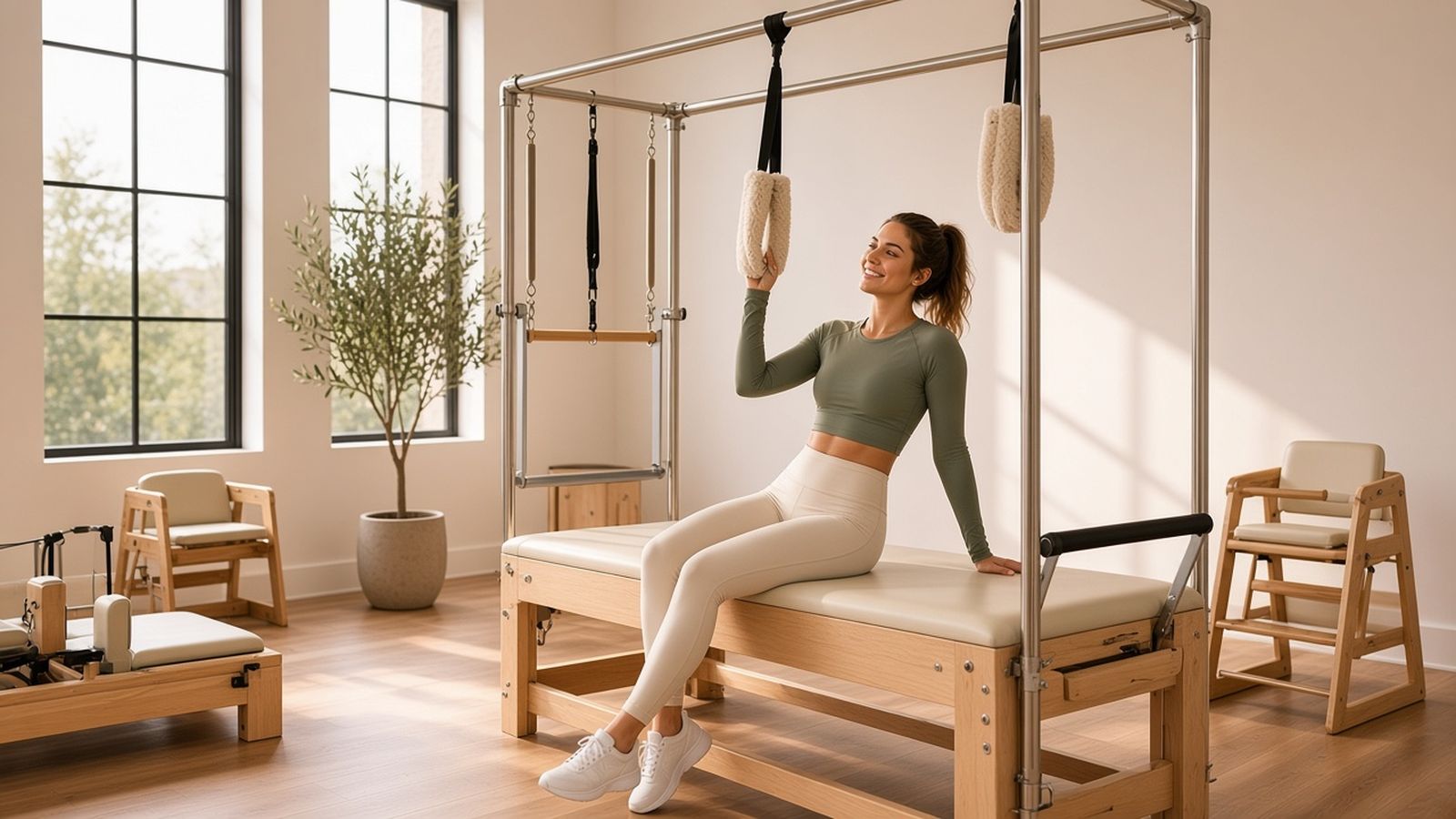
Cadillac or trapeze table: A stable table surrounded by a frame, bars, springs, straps, and a trapeze. Chair: A compact apparatus with a spring-loaded pedal used for strength, balance, and coordination. Reformer: A moving carriage apparatus with springs, a footbar, shoulder rests, and straps. Barrel: A curved apparatus such as a spine corrector or ladder barrel used for support and mobility. Mat: A cushioned floor surface for bodyweight and prop-based work.
Alignment: The organization of the body in relation to itself and the movement task. Articulation: Moving through the spine or another joint with attention to individual segments. Axial elongation: The feeling of lengthening through the spine and central body. Breath: A tool for rhythm, focus, pressure management, and connection to movement. Center: A teaching idea that brings attention to the trunk and the relationship between breath and movement.
Control
Control: Moving with intention rather than relying on momentum. Concentration: Directing attention toward the body, breath, and purpose of an exercise. Coordination: Organizing several actions together with timing and clarity. C-curve: A rounded shape through the spine often used in flexion-based exercises. Flexion: Bending a joint or curving the spine forward. Extension: Lengthening or moving a joint or spine backward within an appropriate range.
G–P: positions, principles, and movement
Position names help an instructor give a shared starting point, while principle terms describe the quality of the movement. They are invitations to notice, not instructions to force a shape. A neutral position may be different for different bodies, and a precise exercise can still include individual options.
When a term is unfamiliar, look for the action inside it. “Lateral flexion” describes bending to the side; “rotation” describes turning; “abduction” describes moving away from the center line. Understanding the verb can make a new exercise feel much less mysterious.
Movement language
Neutral spine: A comfortable, organized spinal position that preserves the spine’s natural curves. Imprint: A teaching term for gently settling the lower back toward the mat; the meaning varies by instructor. Lateral flexion: Bending the spine or body to one side. Rotation: Turning around an axis, such as rotating the spine or hip. Opposition: Using two directions of length or effort to create balance. Pelvic floor: A group of muscles at the base of the pelvis; instructors should discuss this area respectfully and avoid medical claims.
Abduction: Moving a limb away from the body’s center line. Adduction: Moving a limb toward the body’s center line. Articulated bridge: A bridge variation that rolls the spine up or down with attention to segments. Hinge: Moving from the hips while keeping the spine organized. Parallel: A position in which the legs or feet point forward in relation to the body. Turnout: Rotating the legs outward from the hips; the available range is individual.
Teaching principles
Precision: Paying attention to details that support the purpose of an exercise. Flow: Connecting exercises or phases of movement with continuity. Rhythm: The timing or cadence of a movement sequence. Resistance: Force that challenges or supports movement, often from springs, body weight, or props. Repetition: Returning to an exercise or pattern to build familiarity. Stabilization: Organizing part of the body so another part can move with control.
Q–Z: repertoire and class language
Many exercise names come from the classical repertoire, while others are descriptive phrases created by individual teachers. A name can remain the same while the setup or teaching style changes. Focus on the demonstration and the intention in front of you rather than trying to recreate a movement from a word alone.
The glossary below is intentionally plain language. It is not a substitute for hands-on instruction, anatomy education, or professional care. Use it as a bridge between the words you hear and the questions you want to ask.
Common class terms
Repertoire: The collection of exercises associated with a method or teacher. Springs: Coiled resistance used on apparatus such as the reformer, chair, or Cadillac. Footbar: The adjustable bar on a reformer used by the feet or hands. Straps: Handles or loops attached to reformer ropes or other apparatus. Carriage: The moving platform on a reformer. Footwork: A reformer sequence commonly performed with the feet on the footbar. Hundred: A well-known mat exercise involving rhythmic arm pumping and breath; instructors offer many variations. Roll-up: A controlled mat exercise that moves the spine from lying to seated; it can be modified. Roll-over: A more advanced mat exercise involving spinal movement over the head; it requires appropriate instruction. Teaser: A balance exercise that coordinates the trunk and legs; it has many progressions.
Side-lying: A position on one side used for hip, leg, and lateral work. Supine: Lying on the back, face up. Prone: Lying on the stomach, face down. Quadruped: A hands-and-knees position. Standing work: Exercises performed upright, often with balance and apparatus support. Modification: An intentional change to range, resistance, position, or sequence. Progression: A change that increases complexity or challenge when appropriate. Regression: A change that reduces complexity or adds support so the movement can be learned. Cue: A verbal, visual, or tactile instruction that helps a person understand movement. Setup: The arrangement of the body and equipment before an exercise begins.
Quick A–Z reference
Abduction
Moving a limb away from the body’s center line.
Adduction
Moving a limb toward the body’s center line.
Alignment
Organizing the body in relation to itself and the movement task.
Articulation
Moving through a joint or the spine with attention to separate segments.
Axial elongation
The feeling of lengthening through the spine and central body.
Barrel
A curved Pilates apparatus used for support, mobility, and spinal work.
Breath
A tool for rhythm, focus, pressure management, and connection to movement.
Cadillac
A stable table with a frame, bars, springs, straps, and trapeze.
Carriage
The moving platform on a reformer.
Center
A teaching idea connecting attention, breath, and the trunk.
Chair
A compact apparatus with a spring-loaded pedal.
Control
Moving with intention rather than relying on momentum.
Concentration
Directing attention toward the body, breath, and purpose of an exercise.
Coordination
Organizing several actions together with timing and clarity.
C-curve
A rounded shape through the spine often used in flexion-based exercises.
Extension
Lengthening or moving a joint or spine backward within an appropriate range.
Flow
Connecting exercises or phases of movement with continuity.
Footbar
The adjustable bar on a reformer used by the feet or hands.
Footwork
A reformer sequence commonly performed with the feet on the footbar.
Flexion
Bending a joint or curving the spine forward.
Hundred
A well-known mat exercise involving rhythmic arm pumping and breath.
Imprint
A teaching term for gently settling the lower back toward the mat.
Lateral flexion
Bending the spine or body to one side.
Mat
A cushioned floor surface for bodyweight and prop-based work.
Modification
An intentional change to range, resistance, position, or sequence.
Neutral spine
A comfortable, organized position that preserves natural spinal curves.
Opposition
Using two directions of length or effort to create balance.
Parallel
A position in which the legs or feet point forward in relation to the body.
Pelvic floor
A group of muscles at the base of the pelvis.
Prone
Lying on the stomach, face down.
Precision
Paying attention to details that support the purpose of an exercise.
Progression
A change that increases complexity or challenge when appropriate.
Quadruped
A hands-and-knees position.
Regression
A change that reduces complexity or adds support.
Reformer
A moving carriage apparatus with springs, a footbar, and straps.
Repertoire
The collection of exercises associated with a method or teacher.
Resistance
Force that challenges or supports movement.
Rotation
Turning around an axis, such as rotating the spine or hip.
Setup
The arrangement of the body and equipment before an exercise begins.
Side-lying
A position on one side used for hip, leg, and lateral work.
Springs
Coiled resistance used on apparatus such as reformers, chairs, and Cadillacs.
Straps
Handles or loops attached to reformer ropes or other apparatus.
Supine
Lying on the back, face up.
Teaser
A balance exercise coordinating the trunk and legs.
Turnout
Rotating the legs outward from the hips.
Helpful next reads
Find a studio near you.
Explore local studios and choose a place that fits your schedule, questions, and way of moving.
FAQ
Do I need to know Pilates terms before my first class?
No. The instructor should demonstrate and explain the movements. A glossary can help you feel oriented, but learning happens during practice.
Why do Pilates instructors use different terms?
Pilates includes multiple lineages and contemporary approaches. Teachers may use different names for related ideas or explain the same term differently.
What does neutral spine mean?
It usually means a comfortable, organized spinal position that preserves natural curves, but the exact appearance varies by person and exercise.
What is the difference between a reformer and a Cadillac?
A reformer has a moving carriage, springs, footbar, and straps. A Cadillac is a stable table with a surrounding frame and additional bars, springs, and straps.
Can glossary terms replace an instructor?
No. Equipment and movement terms are best learned through clear demonstration and appropriate guidance, especially for advanced exercises.