
Pilates is a practice with many entry points. This guide offers useful context without making the experience more complicated than it needs to be.
The foundation they share
Mat and reformer Pilates are two ways to explore a larger movement method. Both can emphasize breath, control, coordination, alignment, mobility, and strength. Both can be taught in a classical, contemporary, athletic, restorative, or highly individualized style. The equipment is important, but it does not determine the quality of the experience by itself. Clear teaching, appropriate progressions, and a studio culture that welcomes questions matter just as much.
A comparison is most useful when it helps you choose an experience rather than declare a winner. Think about the setting where you learn best. Do you like a simple floor-based practice that you can repeat at home, or do you enjoy the tactile feedback of springs and straps? Are you looking for a small-group studio routine, private instruction, or a format that can travel with you? These questions lead to a more personal answer.
Neither format is automatically easy
Mat work can be subtle and demanding because you create much of the support yourself. Reformer work can feel accessible because the apparatus assists some actions, but the moving carriage and spring choices require attention. Difficulty depends on the exercise, the teacher, the options offered, and your own experience.
What the reformer adds
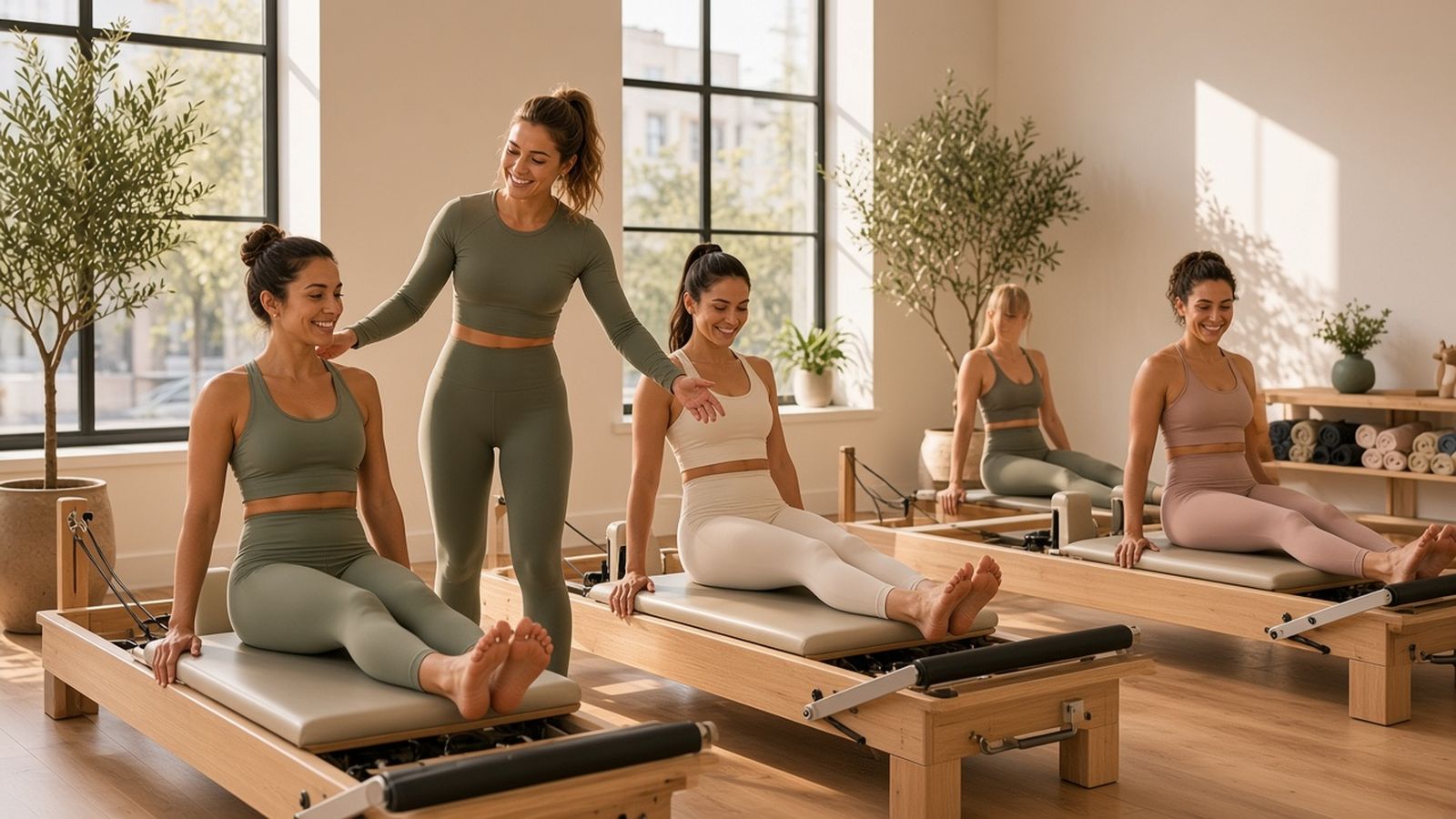
The reformer is built around a moving carriage, springs, a footbar, and straps. Spring resistance can make a movement feel supported, provide feedback, or add challenge. The carriage gives you information about how evenly you are organizing your body, while the straps create possibilities for the arms and legs that are different from floor-based work. Instructors can change the setup to meet a wide range of goals and experience levels.
Group reformer classes often follow a shared sequence that moves through footwork, core work, upper-body exercises, and standing or kneeling patterns. Private sessions may use the equipment more specifically, with time to adjust springs and explain details. Reformer studios can feel energetic and social, but it is still worth asking about class size, instructor attention, and what happens if you are new to the apparatus.
Why people enjoy it
Many people like the sense of progression that comes from learning a spring setup and noticing how a movement changes over time. Others appreciate that the apparatus offers a stable reference point or a way to explore range without relying on floor space alone. Those benefits are possibilities, not promises, and they depend on thoughtful instruction.
What mat practice develops
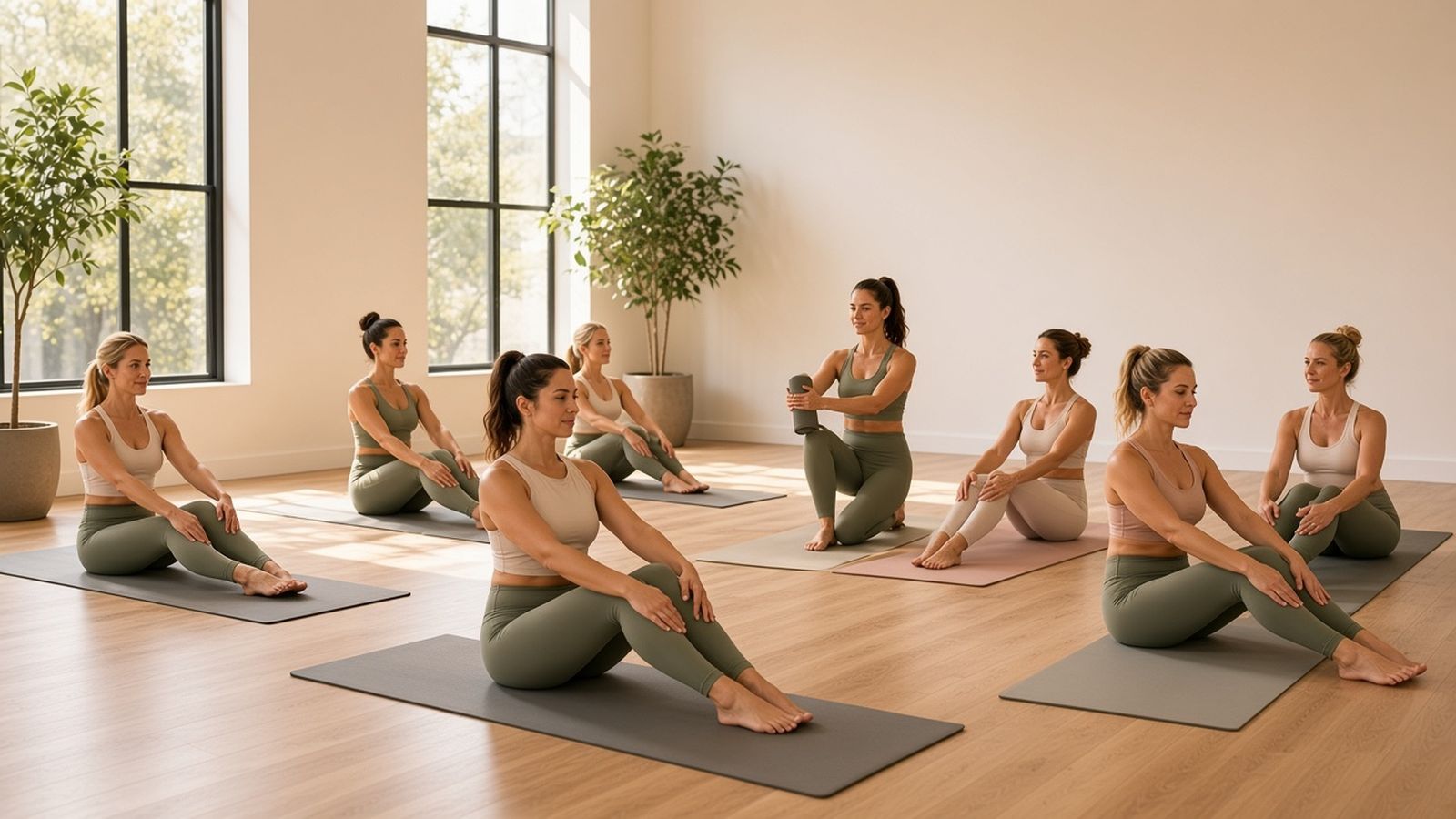
Mat Pilates uses a mat, your body weight, and optional props. It is a practical format for homes, community spaces, travel, and group classes. Because there is less equipment to adjust, mat sessions can make the relationship between breath, spinal movement, and trunk organization easy to notice. A teacher may use imagery and precise verbal cues to help you understand how the body is working without relying on a machine.
Mat classes can be classical or contemporary, slow or athletic, prop-based or intentionally minimal. A ring can provide feedback around the legs or arms, a ball can change balance, and a band can add resistance. The portability is a major advantage, but the format still benefits from a knowledgeable instructor who offers variations and avoids treating one range of motion as the standard for everyone.
A week that combines both formats
Using both formats can make the differences easier to understand. A mat class may help you notice breath, trunk organization, and how you create support without equipment. A reformer class may give you new information through springs, straps, and a moving carriage. You do not need to alternate them in a perfect pattern. Choose based on your schedule, energy, budget, and the kind of learning you want that day.
If you are taking more than one class in a week, give yourself time to recover and notice how your body responds. Ask the studio whether the classes you are considering are appropriate together, especially if one is labeled advanced or fast-paced. A balanced schedule might include one apparatus class, one mat class, and plenty of ordinary movement such as walking. Variety is useful when it supports curiosity rather than creating another requirement.
Which format should you try first?
Try mat if you want a simple entry point, enjoy floor-based work, travel often, or want skills that are easy to practice outside a studio. Try reformer if you are drawn to equipment, enjoy clear resistance, or want a group class with a defined apparatus sequence. If you have never done either, choose the class labeled beginner or foundations and ask what the studio recommends for a first visit.
A private or introductory session can make either format easier to understand. You can ask how the instructor modifies exercises, what the studio considers an appropriate starting level, and whether the teacher has experience with your goals. If you have a health concern, discuss it with your doctor or another qualified professional and share relevant guidance with the instructor before class.
Use both as a conversation
Many practitioners alternate between mat and reformer. Mat work can reinforce foundational awareness, while the reformer can offer new feedback and resistance. Moving between them keeps the practice varied and may help you notice how the same principle appears in different settings.
Choosing a class with confidence
Read the class description instead of relying only on the word Pilates. Look for level, duration, equipment, group size, and preparation notes. A studio that says exactly what a first visit involves is making a useful investment in your experience. Reviews can provide context, but your conversation with the studio is often more informative than a star rating.
The right format is the one that makes you curious enough to return. Pay attention to the teaching, the pacing, the condition of the equipment, and how comfortable you feel asking for an adjustment. You do not have to commit to a long package before you understand the room. Start with a drop-in, introductory offer, or single private session when available, then choose a rhythm that feels sustainable.
Helpful next reads
Find a studio near you.
Explore local studios and choose a place that fits your schedule, questions, and way of moving.
FAQ
Is reformer Pilates better than mat Pilates?
Neither is universally better. Reformer and mat offer different types of feedback, support, resistance, and portability. The better choice depends on your preferences and the quality of instruction.
Can beginners use a reformer?
Yes. Many studios offer beginner reformer classes or introductory sessions. Ask about the class level and tell the instructor you are new to the apparatus.
Can mat Pilates build strength?
Yes. Mat exercises can challenge strength, control, balance, and endurance. A teacher can adjust range, tempo, and props to make the work appropriate for the group.
Do I need a reformer at home?
No. A mat and optional small props are enough for many home practices. Reformer sessions can be experienced at a studio with equipment and an instructor.
Can I do both mat and reformer in the same week?
Many people enjoy combining them. Start with a manageable schedule, allow time for recovery, and ask an instructor or health professional for guidance if you have specific concerns.