
Pilates is a practice with many entry points. This guide offers useful context without making the experience more complicated than it needs to be.
A practice with many entry points
Pilates is not reserved for one age group. The method’s focus on controlled movement, coordination, breath, and body awareness can be explored in many forms, including seated, standing, mat, and apparatus-based sessions. Older adults may come to Pilates for a new routine, a social class, a way to practice strength and mobility, or the chance to learn movements with more attention. The experience should be shaped around the person, not a stereotype about age.
Before beginning a new program or returning after a health change, ask your doctor or another qualified professional what kinds of activity are appropriate for you. Share relevant information with the instructor and ask how they adapt for balance, joint concerns, osteoporosis, surgery history, or other considerations. Pilates can support general movement education, but an instructor should not diagnose, treat, or promise a medical outcome.
Comfort is useful information
A class should challenge attention and capacity without asking you to ignore pain, dizziness, breathlessness, or fear. Tell the teacher when a transition feels unclear or a position does not feel steady. Asking for a chair, wall, cushion, lower platform, or different range is a sign of good self-awareness.
Choosing the right class format
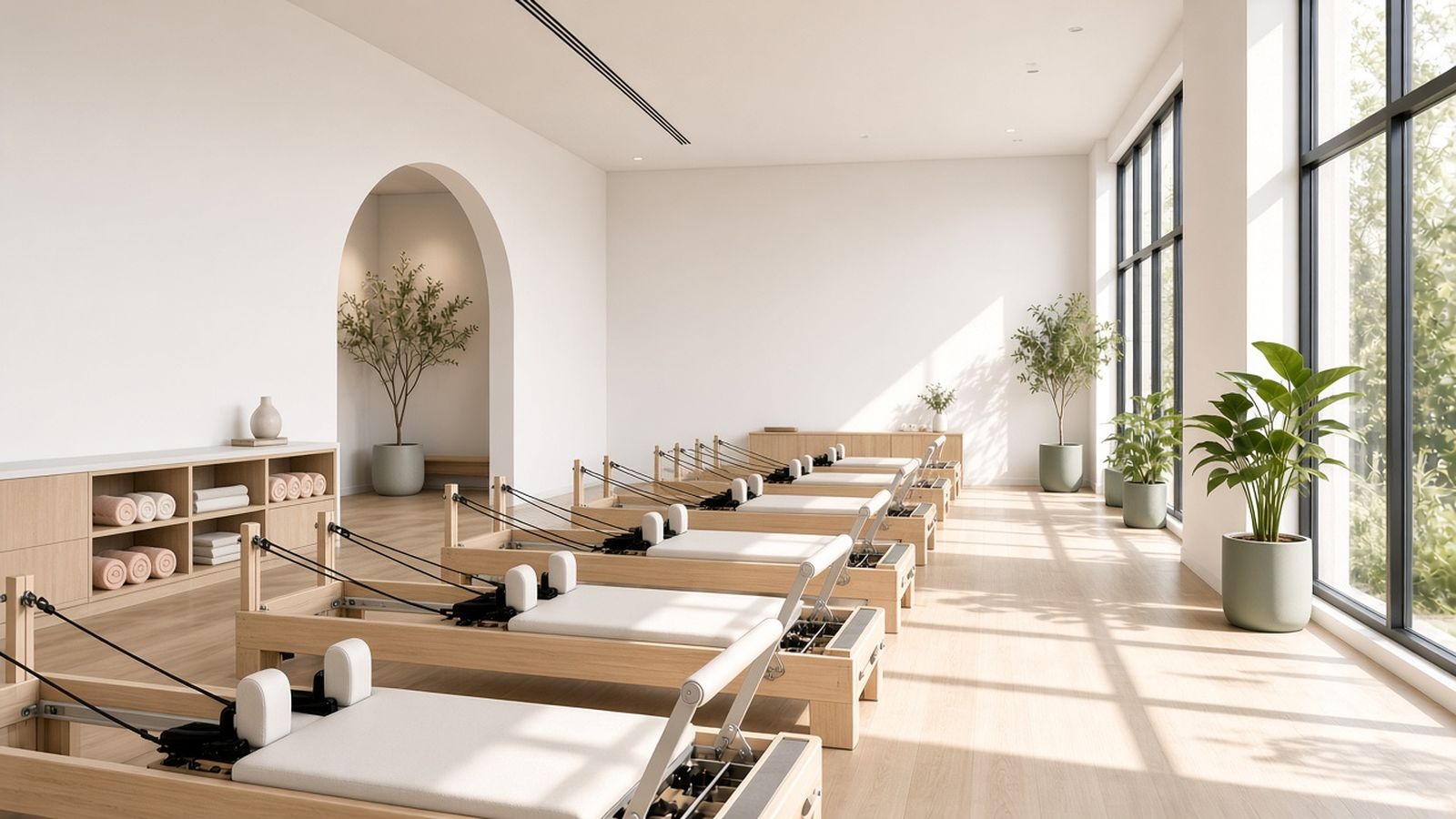
Private instruction provides more time for the teacher to understand your goals and build a sequence around them. A small group can offer individual attention with the energy of practicing alongside other people. Mat classes may use chairs, cushions, or props, while apparatus classes can offer spring support and different ways to organize resistance. Ask what “beginner,” “gentle,” or “active aging” means at that specific studio.
The room itself matters. Look for clear walkways, stable equipment, adequate lighting, accessible entry, and enough time between exercises. Ask whether you can sit down during transitions, whether the instructor demonstrates before asking the group to move, and whether the class has a pace that leaves room for questions. These practical details are part of a responsible teaching environment.

Strength, mobility, and balance
A well-designed Pilates class may explore strength through controlled resistance, mobility through comfortable ranges, and balance through supported standing or changing positions. The emphasis is often on quality and coordination rather than lifting the heaviest load or moving the fastest. A teacher can offer a stable surface, a shorter range, or an alternate position while still making the work meaningful.
Balance work deserves patience. It may be appropriate to keep a hand near a wall, use a chair, or practice a simpler version while the instructor watches. Transitions from the floor to standing should be explained and paced. If you feel unsteady, ask for help and choose the option that lets you stay attentive. Confidence grows from repeated experiences of making a clear, safe choice.
The value of repetition
Repeating a familiar sequence can make the class easier to understand and help you notice small changes in control or ease. Progress does not need to look dramatic. Remembering how to set up, breathing calmly, and moving through a transition with less hesitation are meaningful forms of learning.
Questions to ask a studio
Ask about the instructor’s foundational certification and any training in working with older adults, balance, accessibility, or health-related modifications. Ask how many people are in the class and whether there is an assistant or enough room for individual support. It is also reasonable to ask what happens if you need to stop, rest, or use a different exercise. A welcoming answer tells you a lot about the studio’s culture.
Consider a trial class or consultation before purchasing a package. Notice how you are greeted, whether the instructor listens, and whether the language makes room for different bodies and abilities. Reviews can help you find candidates, but direct questions are more useful for understanding whether a particular class fits your needs.
Notice progress beyond intensity
Progress can look like remembering the setup, breathing through a transition, standing with more confidence, or knowing when to choose a supported option. These changes may be easy to miss if you measure a class only by how difficult it felt. Keep a simple note about what you learned and what you want to ask next time. That record can help you and the instructor make useful choices without chasing a dramatic result.
You can also build a social rhythm around the practice. Attend with a friend, introduce yourself to classmates, or choose a recurring class where the room becomes familiar. Community is not required, but it can make a new routine easier to sustain. A studio that welcomes different paces and celebrates participation gives you more ways to feel at home.
Build a sustainable rhythm
Start with a schedule that leaves room for recovery and daily life. One class per week may be enough to learn the format, while a second session can add continuity when it feels appropriate. Walking, strength work, recreation, and other movement can complement Pilates. Your healthcare team can help you think about how a new class fits alongside existing activity or treatment.
The most valuable practice is one that you can approach with interest and confidence. Celebrate clear communication, steady attendance, and the ability to adjust rather than comparing yourself with a younger participant or a more experienced mover. The instructor’s role is to make good choices easier to see. Your role is to stay curious, respect your limits, and keep the conversation open.
Helpful next reads
Find a studio near you.
Explore local studios and choose a place that fits your schedule, questions, and way of moving.
FAQ
Is Pilates suitable for older adults?
It can be adapted for many older adults, but the right format depends on individual health, mobility, and experience. Ask your doctor and the instructor for guidance.
Should seniors start with mat or reformer Pilates?
Either can be appropriate. Chair-supported mat, private instruction, and beginner apparatus sessions are all possible starting points depending on the studio and your needs.
Can Pilates improve balance?
Classes may include balance practice, but instructors should not promise a medical outcome. Use support and seek professional advice for fall-risk concerns.
What should I tell my Pilates instructor?
Share relevant medical guidance, surgeries, injuries, balance concerns, medications that affect exercise, and anything that changes how you feel during movement.
How often should older adults do Pilates?
Choose a sustainable schedule with appropriate rest. Your doctor or qualified instructor can help you decide how Pilates fits with your overall movement plan.